

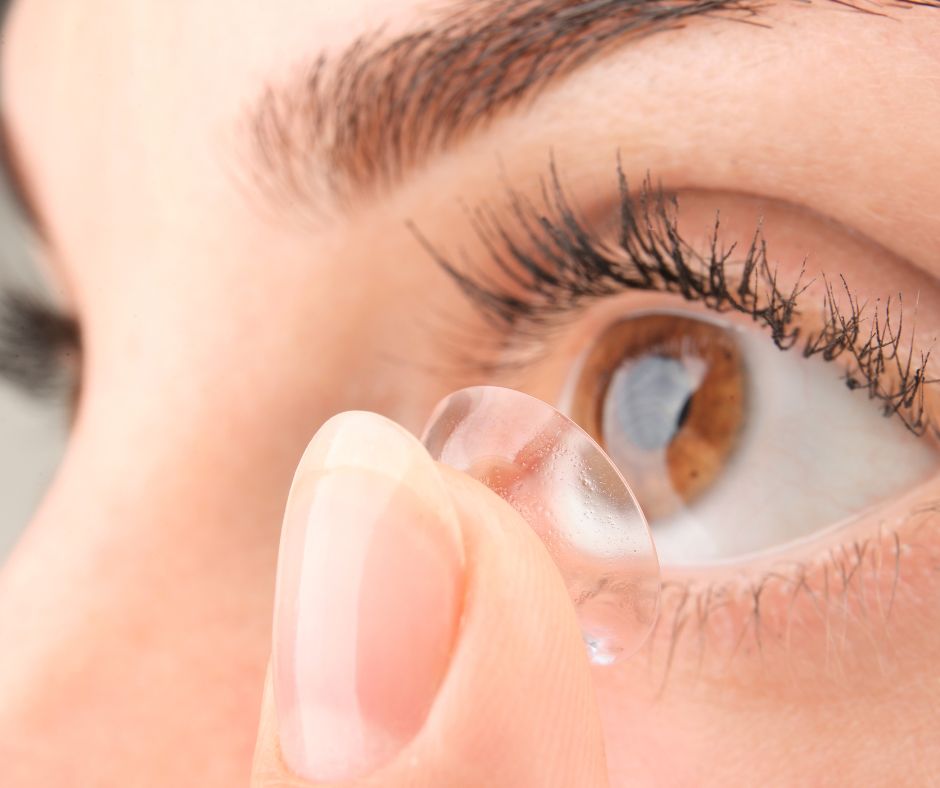
For first-time contact lens wearers — adults whose optometrist has just said you’re a good candidate, and you’re wondering what’s actually involved before your fitting appointment.
Short answer: Start with daily disposables — they remove the cleaning routine, which is where most new wearers get into trouble. Wash your hands every time. Never use tap water on lenses. Book a fitting so an optometrist can match the right lens to your prescription and eye health.
Your optometrist just told you you’re a good candidate for contact lenses. Maybe you’re excited. Maybe you’re nervous about the idea of touching your own eyeball. Both reactions are completely normal.
We fit first time contact lens wearers every week. Here’s what to know before your fitting appointment, how to think about dailies versus monthlies, and the bits of the routine that genuinely matter so your eyes stay healthy and comfortable.
Dailies Vs Monthlies — Which Suits You Better?
Short answer: Dailies for first-timers, part-time wear, allergies and travel — fresh lens daily, no cleaning. Monthlies for full-time wearers comfortable with a nightly cleaning routine — lower cost per day if the routine is followed properly.
This is the first decision, and it’s almost always simpler than people think.
Daily Disposable Lenses
You put in a fresh pair every morning. You throw them away at night. No cleaning, no cases, no solutions, no remembering which month you started wearing the current pair.
Who they suit:
- First time wearers — the routine is as simple as it gets
- People who wear lenses part time (sport, events, weekend wear)
- Allergy sufferers — a fresh lens every day means no buildup of pollen or allergens
- Anyone who travels often
- Anyone who’d rather not deal with a nightly cleaning routine
The trade-off: Higher cost per day than monthlies, at least on the sticker. But when you factor in the cost of cleaning solution, cases, and the occasional eye infection or red eye that comes from cutting corners on hygiene, the gap narrows fast.
Monthly Lenses
You wear the same pair for up to 30 days. Each night you remove them, clean them, and store them in fresh solution.
Who they suit:
- Full time wearers who want the lowest ongoing cost
- People who are comfortable with a consistent nightly routine
- Prescriptions that aren’t available in daily disposable form (some complex or unusual prescriptions)
The trade-off: You have to do the cleaning routine properly every single night. Cutting corners is the fastest route to an eye infection, and contact lens related infections can be serious.
Fortnightly Lenses
Some brands offer a two week replacement cycle. Same cleaning requirements as monthlies, just replaced more frequently.
Our usual recommendation for new wearers: Start with dailies. They remove the cleaning routine entirely, which is where most new wearers get into trouble. Once you’re confident with insertion, removal, and when your eyes feel off, you can move to monthlies if the cost per day matters to you.
Putting In Contact Lenses For The First Time
Short answer: Wash hands, check the lens isn’t inside out, hold your eyelids open, look slightly up, place the lens on the white of the eye just below the iris, release, blink. Most people are comfortable within a week. Your optometrist walks you through it at your fitting.
It feels strange the first few times. Your body’s natural reflex is to protect your eyes, which means blinking and flinching away from anything coming toward them. That reflex softens with practice, and most people are comfortable within a week.
- Wash your hands. Thoroughly, with soap and water. Dry them with a lint free towel. Anything on your hands goes onto the lens, and from the lens onto your eye.
- Check the lens isn’t inside out. Place it on the tip of your index finger. It should look like a smooth bowl with clean edges. If the edges flare outward, it’s inside out. Flip it.
- Hold your eyelids open. Use the middle finger of your lens hand to pull down your lower lid. Use your other hand to hold the upper lid. You’re making room so the lens goes in without fighting your reflex.
- Look slightly up. Place the lens on the white part of your eye, just below the iris.
- Release and blink. Let go of your eyelids gently and blink a few times. The lens will centre itself.
- Repeat on the other eye.
Your optometrist will walk you through the whole process at your fitting appointment. We don’t let you leave until you can put them in and take them out confidently. That’s the entire point of the fitting session.
Taking Them Out
- Wash your hands.
- Look upward.
- Slide the lens down onto the white of your eye with your index finger.
- Pinch the lens gently between your thumb and index finger and lift it off.
For daily lenses, discard. For monthly lenses, place in a clean case with fresh solution.
If you struggle with removal in the first week or two, a soft contact lens handler or lens tweezers can make the process much easier while you build muscle memory. Most people stop needing them after a month or so, but there’s no shame in using them for as long as they help.
Cleaning And Care (Monthlies Only)
Short answer: Rub each lens with multipurpose solution for ~20 seconds, rinse, store in fresh solution (never top up old solution). Replace the case every 1–3 months. Never use tap water — that’s the most common cause of serious contact lens infections.
If you’re wearing daily disposables, skip this section. You don’t need to clean anything.
For monthlies or fortnightlies:
- After removing each lens, place it in the palm of your hand
- Apply a few drops of multipurpose solution
- Gently rub the lens with your fingertip for about 20 seconds. Even if the solution is labelled “no rub”, rubbing removes more deposits
- Rinse with fresh solution
- Place in a clean case filled with fresh solution (never top up old solution, always replace it completely)
- Replace your lens case every 1 to 3 months
Never use tap water on contact lenses. Tap water contains microorganisms that can cause serious eye infections, including Acanthamoeba keratitis, a painful and potentially sight threatening infection. This also means: don’t swim or shower in your lenses unless you’re wearing sealed goggles, and don’t rinse your lens case with tap water.
This isn’t overcautious. We see cases of contact lens related infection every year, and the most common cause is a patient who took a shortcut with water. Follow the rule strictly and you’ll never have the problem.
The Lenses We Commonly Fit
Every prescription and every eye is different. Your optometrist will recommend the right lens for your specific situation at your fitting. Here are the ones we fit and stock most often, and what each is best suited for.
Daily Disposables
- Dailies Total 1: Uses water gradient technology, which means the outer surface of the lens is almost entirely water. A common first choice for patients who also have some dry eye.
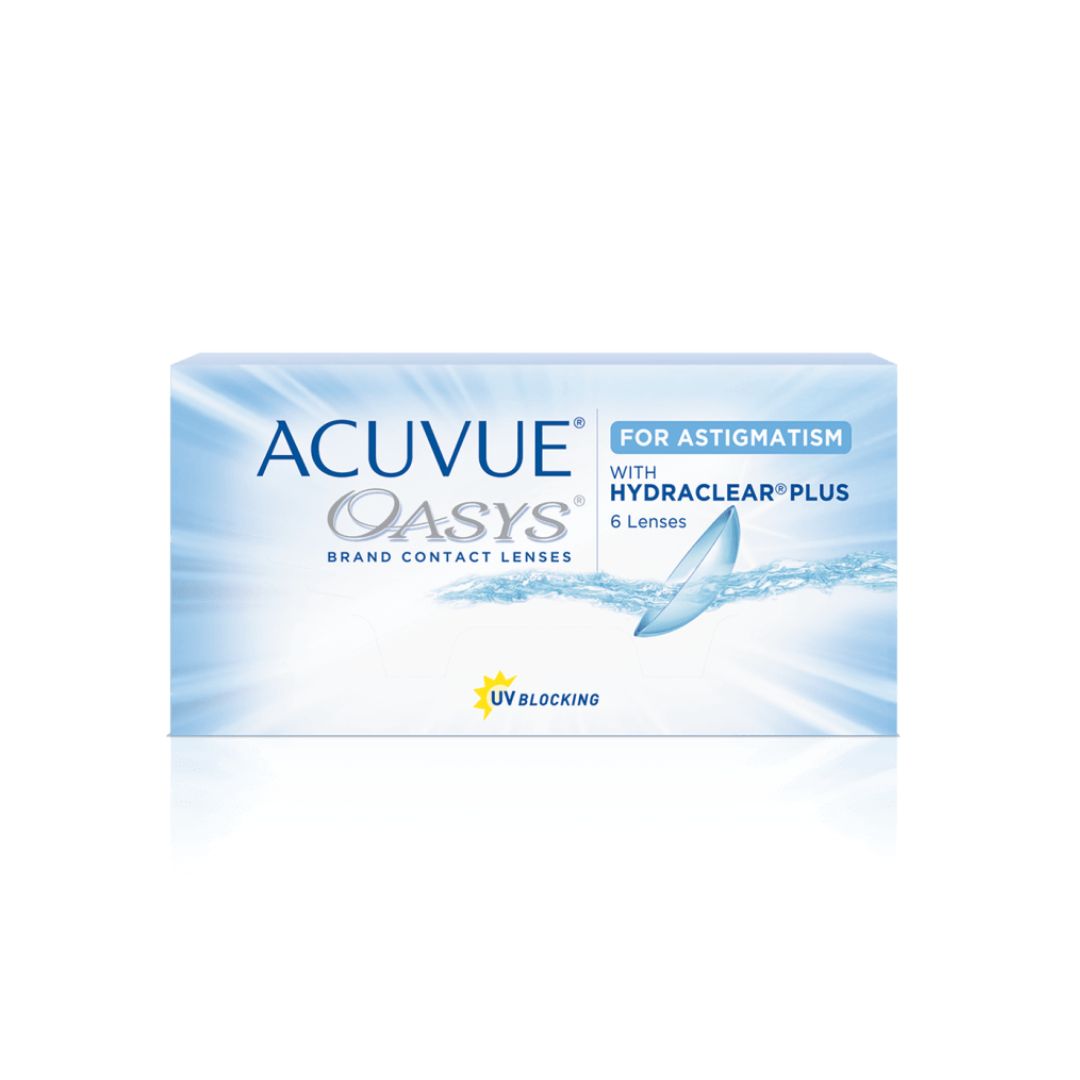
- Acuvue Oasys 1 Day: High oxygen transmission and built in UV protection. Popular with people who spend time outdoors or in bright conditions.
- Precision 1: Alcon’s SmartSurface technology creates a thin moisture layer across the lens, supporting all day comfort.
- Miru 1Day Flatpack: The thinnest contact lens packaging in the world. The lens sits on a flat pack so it’s already the right way up when you pick it up, which takes the guesswork out of the inside-out check for new wearers.
Monthly Lenses
- Biofinity: A well established monthly lens with high oxygen permeability. Available in a wide prescription range, including complex prescriptions.
- Air Optix Plus HydraGlyde: SmartShield surface technology resists the protein and lipid deposits that cause end of month discomfort. A good choice if you’re finding your current monthlies get uncomfortable toward the end of each pair.
If You’ve Got Dry Eye Or Sensitive Eyes
Contact lens wear can contribute to dry eye, and dry eye can make contact lens wear less comfortable. If you’re already managing dry eye symptoms, the fitting conversation should include which lens type suits you best, and whether to pair the lenses with any supporting treatment.
Talk to us at your fitting if any of these apply. Contact lens wear and dry eye are manageable together, but the approach has to be tailored.
When To Call Your Optometrist
Short answer: Pain, persistent redness, sudden blur, discharge, lingering “something in my eye” after removal, new light sensitivity — call straight away. Don’t wait it out. Early review prevents serious complications.
Some things can wait for your next appointment. Some things can’t. Call us (or any optometrist) if you notice:
- Pain that doesn’t settle once the lens is out. Pain is your eye telling you something is wrong.
- Redness that persists for more than a few hours.
- Sudden blurred vision with lenses in.
- Discharge or excessive tearing.
- A feeling that something is still stuck in your eye after removal.
- Sensitivity to light that wasn’t there before.
Any of these can indicate infection, a damaged lens, or a corneal issue. Don’t wait it out, and don’t assume it’ll resolve overnight. Early treatment prevents complications that are genuinely serious.
FAQs
How long does it take to get used to contact lenses?
Most new wearers feel comfortable putting in and taking out their lenses within a week. Physical comfort (not feeling the lens on your eye) usually settles within the first two or three days. If you’re still struggling with insertion after the first fortnight, book a follow up. Sometimes a different lens material or a handling device makes a big difference.
Can I sleep in my contact lenses?
Not unless they’re specifically prescribed for overnight wear. Standard daily and monthly lenses are designed for daytime wear only. Sleeping in standard lenses reduces oxygen flow to your cornea and significantly increases infection risk. If overnight wear matters to you, talk to your optometrist about extended wear lenses.
What happens if a contact lens gets stuck in my eye?
It hasn’t gone behind your eye. That’s anatomically impossible. It’s usually slipped to the side or folded up. Wash your hands, put a few drops of preservative-free lubricant in, and gently massage the closed eyelid until the lens moves back to the centre where you can remove it. If it won’t come out after 10 to 15 minutes, stop trying and call your optometrist.
Can I wear contact lenses if I have dry eyes?
Often yes, but the lens choice matters more than it would for someone without dry eye. Daily disposables with high water content tend to be more comfortable for dry eye patients than older monthly materials. Pairing contact lens wear with a dry eye management routine (heat therapy, lid hygiene, supplements) can support more comfortable wear. Your optometrist will match the lens to your tear film at the fitting.
How much do contact lenses cost in Australia?
Prices vary based on the brand, the technology inside the lens, and whether you’re buying 30 packs or 90 packs. Daily disposables sit at one tier, monthlies at another, and specialty lenses (toric for astigmatism, multifocal for presbyopia) cost more because the optics are more complex. Current pricing for each option is on its product page. We also offer discounted pricing for ongoing subscriptions, so ask us at your fitting.
Do I need an optometrist to buy contact lenses?
Yes. Contact lenses are classified as medical devices in Australia and require a valid prescription from a registered optometrist or ophthalmologist. Even if you’ve worn lenses for years, your prescription needs to be current. We check the fit, the health of your cornea, and the prescription itself at each review.
When This Guide Isn’t For You
- You’re under 16 — children’s contact lens fitting is a separate conversation with parents/guardians. Book a consult.
- You haven’t had a current eye exam — get the prescription and corneal health check first. Lenses come after, not before.
- You want to wear cosmetic lenses without a prescription. Don’t buy unregulated lenses online — illegal in Australia and a known cause of corneal injury.
Ready To Start?
Book a contact lens fitting at our Central Coast practice and we’ll match the right lens to your eyes, your prescription, and the way you’ll actually wear them. You’ll leave your fitting confident about putting them in, taking them out, and looking after them.
Shop Contact Lenses at Eyes By Design · Book a Contact Lens Fitting
This article is intended to promote understanding of and knowledge about general eye health topics.
It should not be used as a substitute for professional advice, diagnosis or treatment.
Always seek the advice of your health care professional prior to incorporating this as part of your health regimen.

Dr Nicholas Altuneg
For over two decades, my greatest passion has been helping people of all ages live improved lives through better vision. At Eyes by Design, vision is so much more than being able to see clearly or read small letters from far away; it determines your perceptions and reactions every second of the day.
Read more about Dr Nick
What Others Are Reading:


Shop by Categories
Get In Touch
Contact us today