

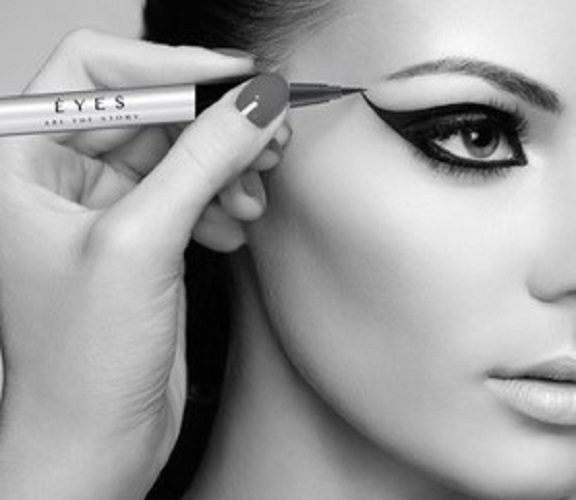
Redness, itching, watery, it’s not your eyes. It’s what you’re putting on them.
The skin around your eyes is the thinnest on your body. The tear film sitting on your eye surface is a three-layer structure that disrupts easily. And your eyelids contain oil-producing glands — meibomian glands, that can be quietly blocked by products you’ve been applying every morning for years.
Most conventional eye cosmetics weren’t designed with any of this in mind. They were designed to stay on, look good, and not grow bacteria. Your comfort is somewhere further down the list.

What’s actually in your makeup
A few ingredients worth knowing about, particularly if your eyes have been trying to tell you something:
- Formaldehyde releasers: listed as DMDM hydantoin, quaternium-15, or imidazolidinyl urea. These preservatives work by slowly releasing formaldehyde into the product. Your eyelid skin gets to absorb it.
- Fragrance: the number one cause of cosmetic allergic reactions, and rarely disclosed in detail. “Unscented” doesn’t mean fragrance-free; it often means a masking fragrance has been added to cover the smell of other ingredients.
- Isopropyl cloprostenate: the active ingredient in many “lash growth” mascaras. It can change your iris colour and cause permanent eyelid darkening. This is not a fringe concern; it’s well-documented in optometric literature.
- Waterproof formulas: removing them requires oil-based or solvent-based removers that strip the periocular skin and disrupt the meibomian glands with every use.
- Glitter and loose shimmer particles: these migrate into the tear film. Under a slit-lamp, they look exactly like you’d expect foreign particles on a corneal surface to look.
For people who already have dry eye disease, blepharitis, or meibomian gland dysfunction, these aren’t just irritants, they can actively worsen the underlying condition.
What to look for instead
“Ophthalmologist tested” and “dermatologist tested” are not the same thing. Dermatologist testing checks for skin reactions. Ophthalmologist testing evaluates safety for the eye surface, tear film, and meibomian glands specifically. The difference matters.
Beyond that: fragrance-free (not unscented), non-waterproof where possible, and no loose glitter or particles. Pressed powder is safer than loose. Cream and liquid formulas safer still for sensitive eyes.

A routine that doesn’t compromise your eye health
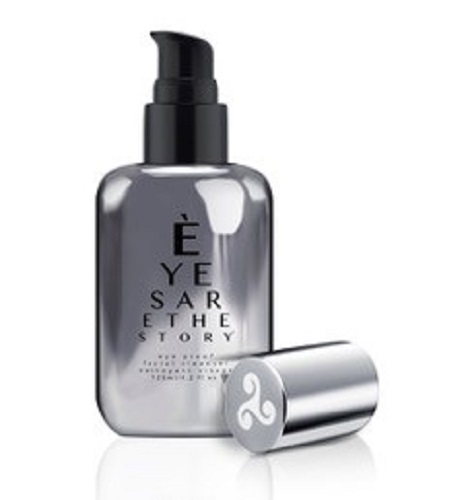
1 Start with genuinely clean lids. Not “I washed my face” clean — properly clean. Overnight bacteria, old oil, and debris sitting under your makeup is a setup for irritation before you’ve even uncapped the mascara. A dedicated eyelid cleanser is different from a face wash.Eyes Are the Story Eye Proof Facial Cleanser →
2 Prep the periocular skin. A lightweight, eye-safe serum creates a barrier between skin and product — protecting the delicate area around the eye and giving makeup a more even surface to sit on. Eyes Are the Story Eye Proof Facial Serum →
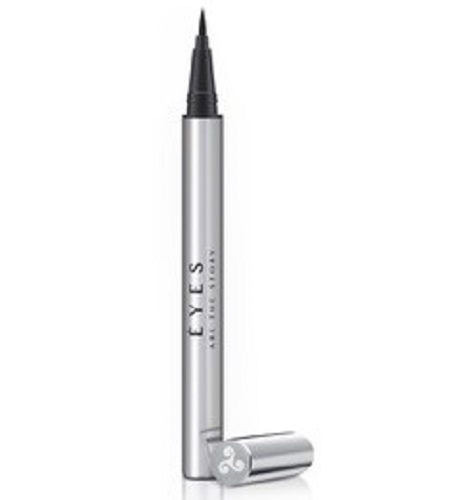
3 Choose products developed with eye care professionals. Pencil liner is generally safer than liquid for sensitive eyes — but if you prefer liquid, ophthalmologist-approved options do exist. Eyes Are the Story Eye Proof Liquid Liner →
4 Remove properly. This is where most of the damage happens. Rubbing your eyes with cotton pads and generic remover disrupts your meibomian glands every single night. The Eyes Are the Story Facial Cleanser doubles as a makeup remover — one product, one step, no stripping. Eyes Are the Story Eye Proof Facial Cleanser →
If your eyes are already reacting
If you’re reading this because your eyes are already red, gritty, or uncomfortable, step one is to give your eyes a break from all eye makeup for a few days.
Then:
- Introduce one product at a time so you can identify any triggers
- Start a simple eyelid hygiene routine (warm compress + lid cleanser daily)
- See your optometrist to rule out underlying conditions
- When you reintroduce makeup, switch to ophthalmologist-tested products
If demodex mites are part of the picture (more common than most people realise, and often overlooked), a targeted cleanser can help clear the problem before you bring makeup back into the equation. Oust Demodex Cleanser →
About Eyes Are the Story
We stock this range because it’s genuinely different. Founded by Amy Gallant Sullivan — a dry eye advocate whose father is one of the world’s leading dry eye researchers, the brand pioneered the concept of “optocosmetics”: makeup developed in collaboration with eye care professionals, not just tested on skin. It’s approved in over 30 countries and sits at the intersection of aesthetics and ocular health in a way that very few products do.
It’s the only makeup range we recommend without caveats.
The short version
Sensitive eyes don’t need to mean no makeup. They need better makeup — formulated with the eye surface in mind, applied over properly prepped skin, and removed gently at night. That’s the whole routine. The products exist. The compromise is optional.
This article is intended to promote understanding of and knowledge about general eye health topics.
It should not be used as a substitute for professional advice, diagnosis or treatment.
Always seek the advice of your health care professional prior to incorporating this as part of your health regimen.
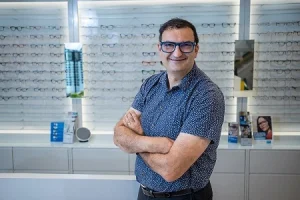
Dr Nicholas Altuneg
For over two decades, my greatest passion has been helping people of all ages live improved lives through better vision. At Eyes by Design, vision is so much more than being able to see clearly or read small letters from far away; it determines your perceptions and reactions every second of the day.
Read more about Dr Nick
What Others Are Reading:

Shop by Categories
Get In Touch
Contact us today